Client work · Archive · 2025
Hwang Yoo-Yup Archive
The archive gives newcomers and scholars two different ways into a painter’s work.
Live on Framer. The catalogue of works is still being added.
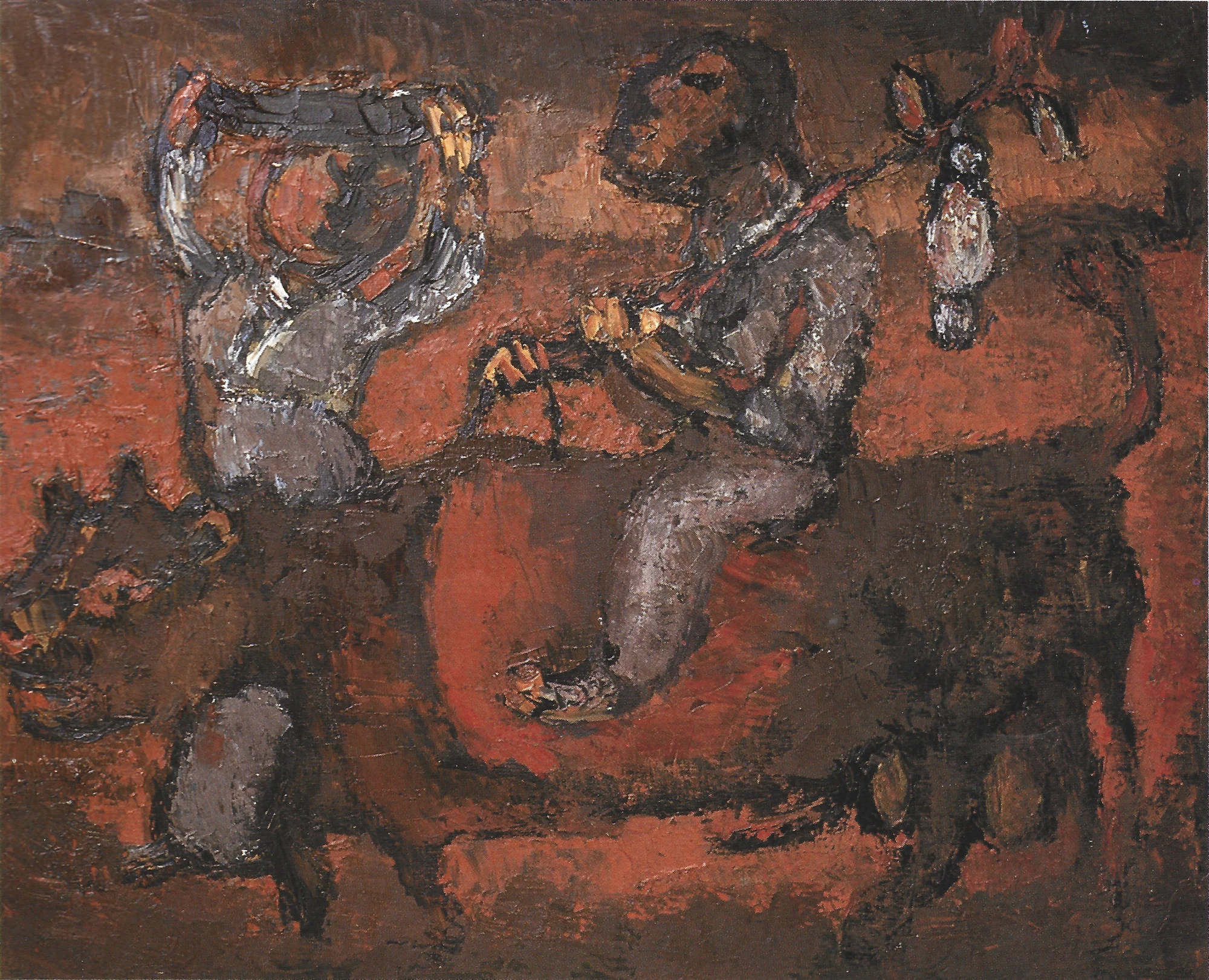
In brief
The problem Hwang Yoo-Yup (1916–2010) painted the same subjects for six decades. First-time visitors need some background before the work makes sense, while scholars need dates, exhibition history and a searchable record, and the background gets in their way.
What I made I built one site with two paths. Discovery, organized by theme and motif, is the default, and Archive Mode, organized as a structured record, is one toggle away on every page.
What happened The site is live on Framer with both modes working, and the catalogue is being added. The estate told me the site honors their father’s work and legacy.
Context
Two audiences, one site
First-time visitors often know little about Korean history, and without that context, six decades of returning to the same subjects can look repetitive. Scholars and curators arrive with specific questions and need the record rather than the story.
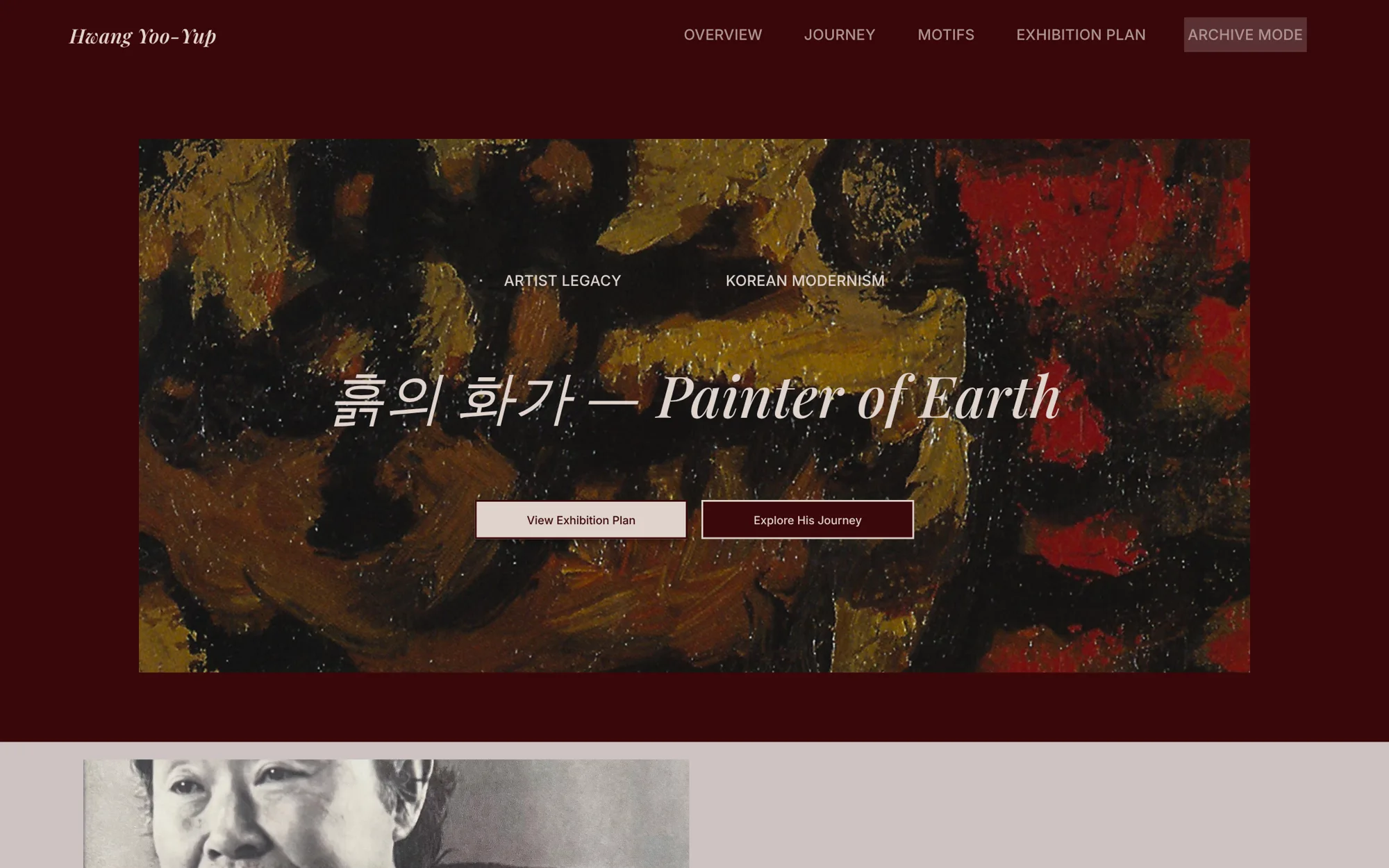
I went through the estate’s exhibition catalogues, academic texts and institutional records, looked at how other artist archives handle mixed audiences, and interviewed four people in the art world: an art advisor, a gallery dealer, a museum director and a practicing artist. Two findings shaped the structure. Newcomers need context first, and that same context slows researchers down.
Decisions
Four decisions behind the site
One site with two paths
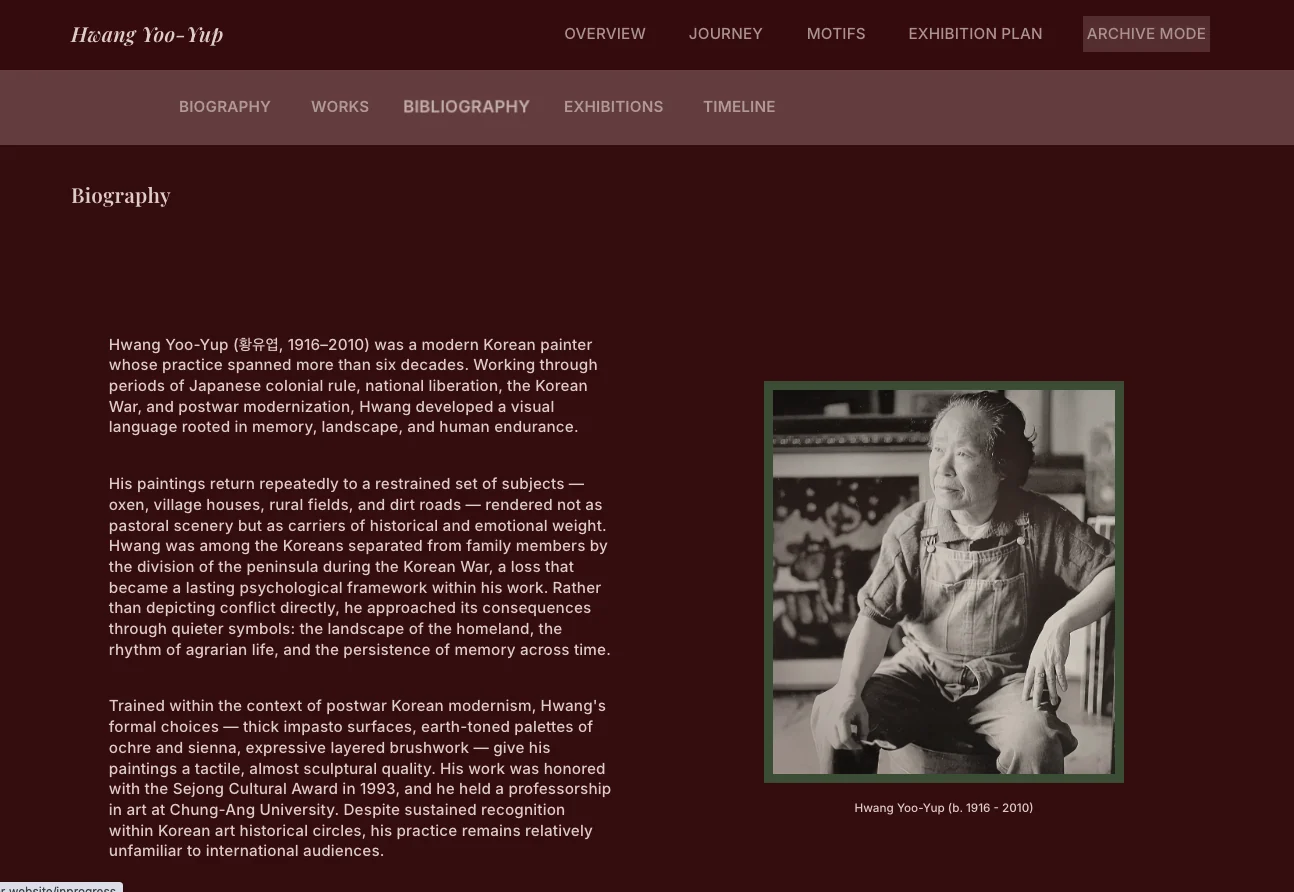
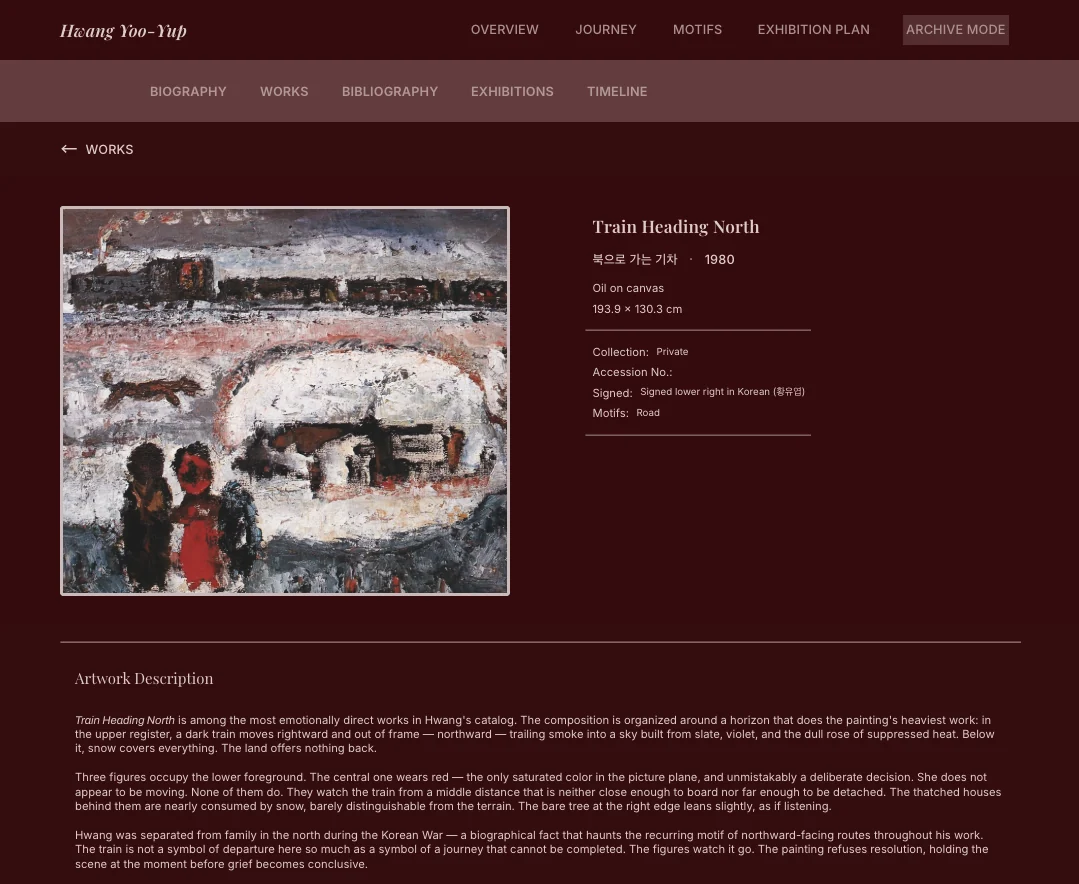
The archive is one site with two paths. Discovery, with Overview, Journey, Motifs and Exhibition Plan, is the default, and Archive Mode, with Biography, Works, Bibliography, Exhibitions and Timeline, is one toggle away on every page.
Instead of two sites, a public exhibition site and a scholarly archive.
Two sites would have been too much for the estate to maintain. With one, each audience starts where it makes sense for them and can switch at any point.
Themes first, dates in the archive
Discovery is organized around three themes I wrote and a section on recurring motifs. The chronology lives in Archive Mode.
Instead of date order, which most artist archives use.
Newcomers do not yet have the background to make sense of a timeline, and themes give them somewhere to start.
Everything about a work on one page
Each artwork page carries the full-size image, the curatorial text, its themes, details and related works, with the historical context in a section that expands on request.
Scholars can skip the context, and newcomers can open it.
A quiet visual system
The site uses a dark burgundy background, warm off-white text and earth tones taken from Hwang’s paintings, with Korean and English set at equal size.
I wanted the paintings to carry the colour, so I kept everything else quiet and checked each choice against whether it drew the eye to them.
Proof
The live archive
This is the archive as its visitors see it. Discovery and Archive Mode can be switched from any page.
The live site is embedded below.
Next
Live, with the catalogue in progress
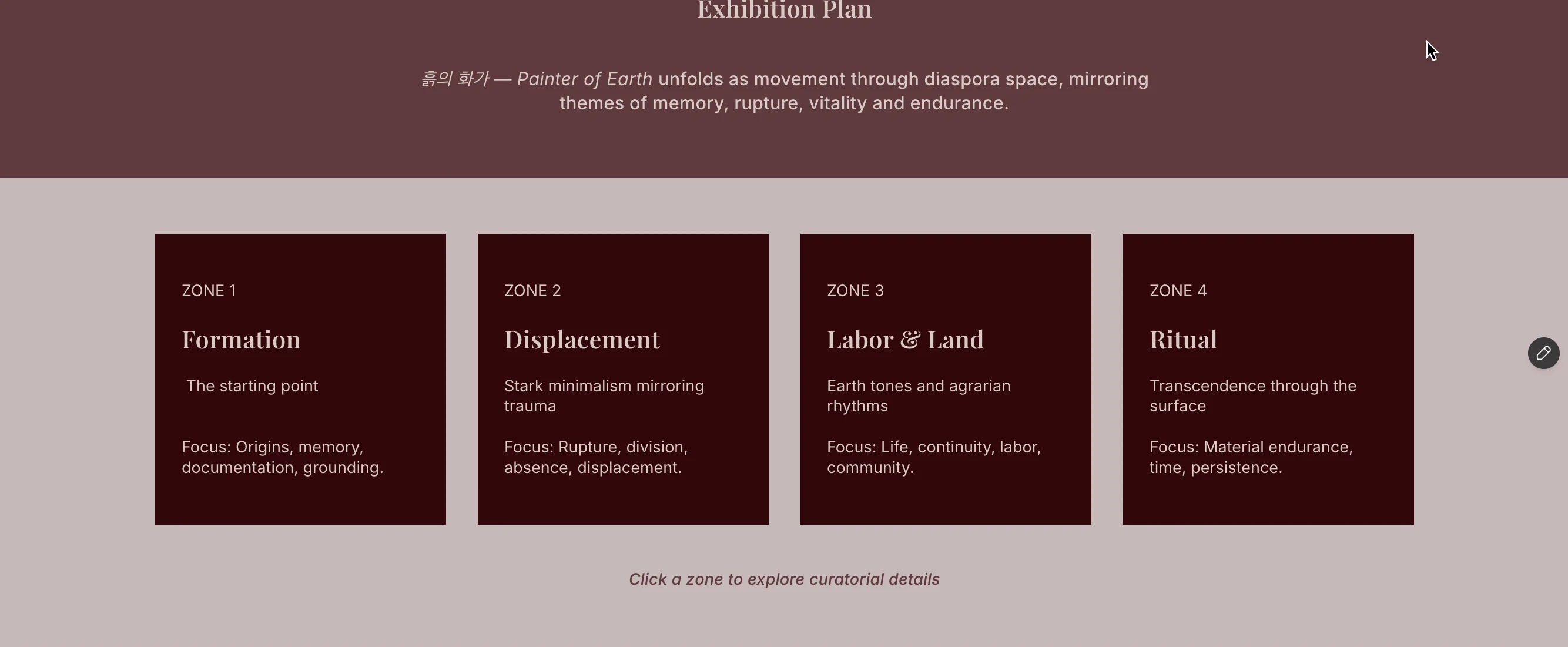
The catalogue of works is still being added. I also wrote an exhibition plan for a retrospective in four sections, Formation, Displacement, Labor & Land, and Ritual. It is a proposal, and no date has been set.
The estate told me the site stands as a testament to their father’s work and honors his legacy.